Practical Guide · 5 Minute Read
What To Prepare Before Requesting A Fabrication Quote
You do not need every answer before starting a conversation. But a few clear details can make that first conversation far more productive.
A fabrication quote connects a part’s intended use to the operations required to make it. When information is missing, the scope may need assumptions or further review. These simple preparation steps help everyone focus on the same result.
1. Explain The Application
Describe what the component does, where it will be used and what it connects to. A decorative panel, an equipment support and a structural member can look similar on a sketch but have very different requirements. Identify the responsible designer for engineering or compliance decisions.
2. Gather The Current Drawings
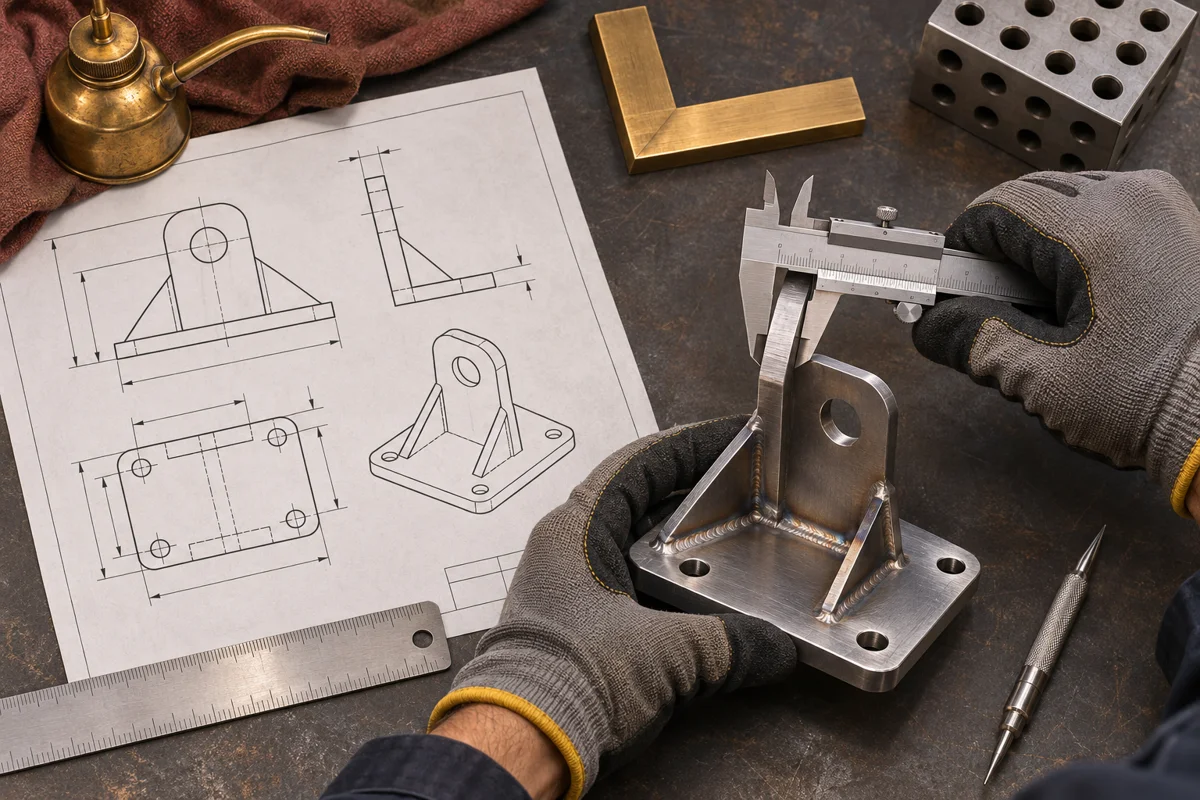
Send the latest dimensioned drawing and identify its revision. Include units, quantities and any available CAD files. If a sketch is all you have, mark the dimensions you know and the ones that still need verification.
3. Identify Material And Finish
State the material grade and thickness if they have been specified. Explain exposure, appearance and cleaning requirements. Paint, coating, polishing and other finishes should be described as part of the scope, not left to assumption.
4. Call Out Critical Interfaces
Hole locations, mating parts, clearance and installation access can be more important than the overall dimensions. Highlight features that must fit existing conditions and identify who is responsible for confirming site measurements.
5. Describe The Next Step
Explain whether the part needs further assembly, finishing or site installation. Delivery location, unloading, packaging and timing all affect the practical plan. Separate a preferred date from a fixed project constraint.
6. Keep Open Questions Visible
An honest list of undecided details is useful. It allows the project team to identify what can be priced, what needs a provisional allowance and what must be resolved before fabrication begins.
A Simple Starting Point
Drawing or sketch. Intended use. Material and finish. Quantity. Critical dimensions. Target schedule. Start there, then work through the remaining questions together.
General project-planning information only. This guide does not replace project-specific engineering, safety, code or professional advice.