Plate Profiles
Defined by your application and approved dimensions.
Our Capabilities
Profile-cut metal parts planned around the right material, file and finishing requirements.
From File To Form
Profile-cut metal parts planned around the right material, file and finishing requirements.
Cutting accuracy begins before a machine starts. Material thickness, drawing scale, internal corners and edge requirements all influence a part’s suitability for its intended assembly. We review the cutting scope and any follow-on forming, welding or finishing needed to turn a flat profile into a useful component.
Discuss Your Requirements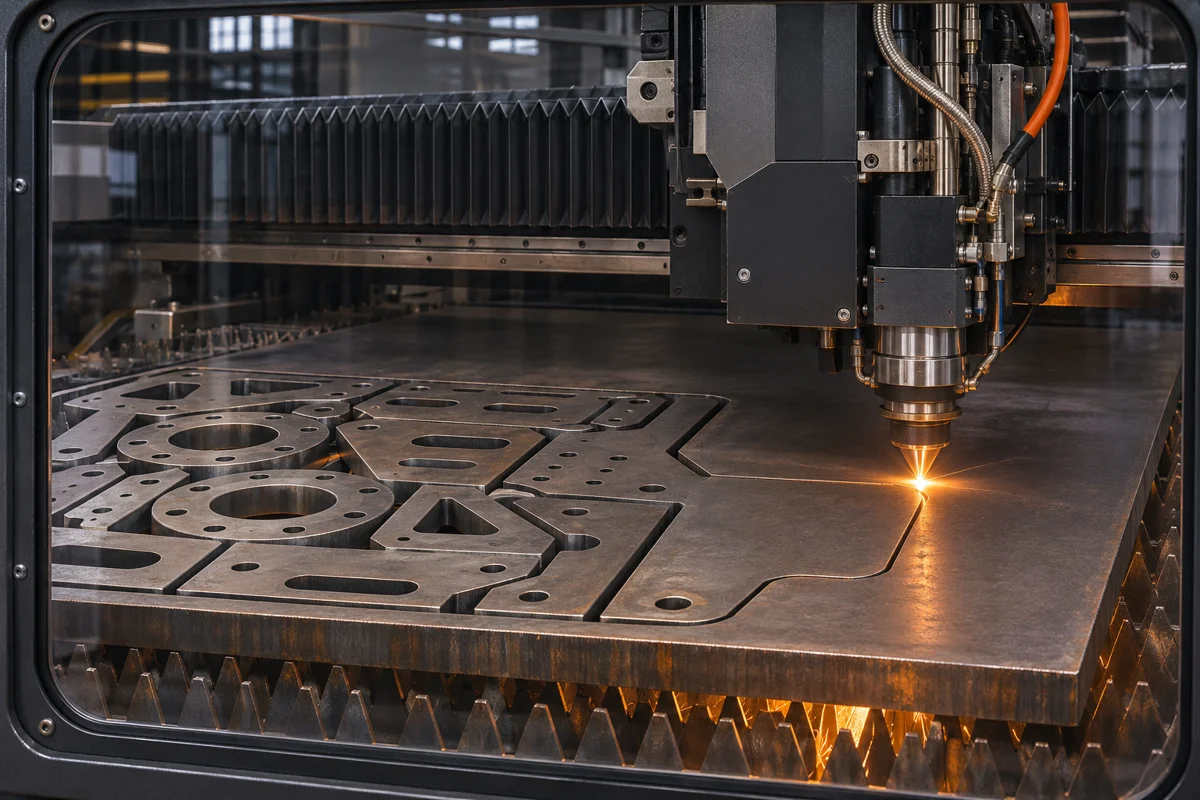 RIVETMERE / CAPABILITIES
Define The Scope
These are starting points for a conversation. Final capabilities, specifications and availability are confirmed against your project.
Defined by your application and approved dimensions.
Coordinated with adjoining materials and components.
Considered alongside finish and handling requirements.
Defined by your application and approved dimensions.
Coordinated with adjoining materials and components.
Considered alongside finish and handling requirements.
Before Fabrication Begins
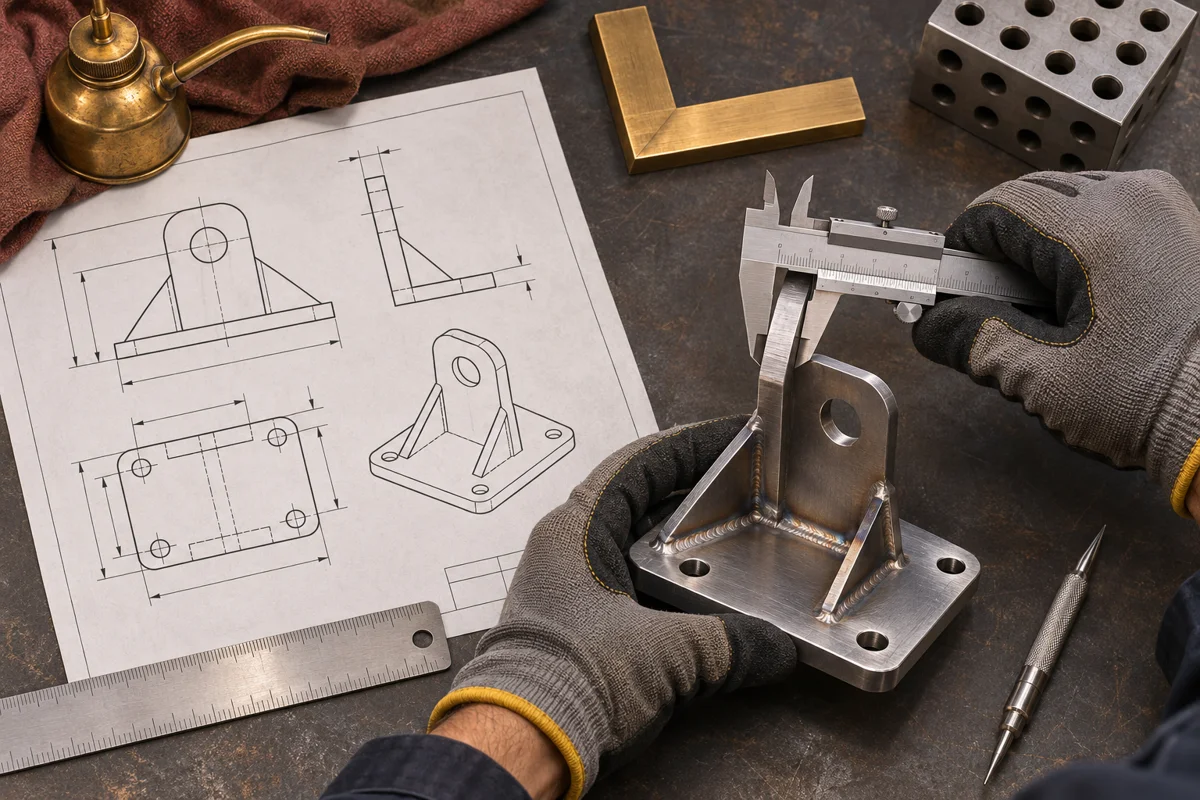
Supply dimensioned drawings and available vector or CAD files. Clearly identify units, material, thickness and revision; do not rely on file names alone to define the part.
Call out functional holes, fits, slots and edges that matter to the assembly. Tolerance requirements should be discussed for the actual material and process, rather than assumed.
Deburring, tapping, bending and welding may change the best cutting sequence. Include downstream requirements so the flat pattern can support the finished component.
Where It Fits
The right approach begins with the setting. Tell us how the component will be used, what it connects to and the conditions it will face.
How Work Moves Forward
A shared plan makes the next decision easier.
Share drawings, quantities, materials and the intended use. Flag what is still being decided.
Review scope, interfaces, finishes and approvals before fabrication is released.
Agree timing, handling, delivery and the responsibilities of the next trade.

Think Beyond One Operation
A part may need cutting, forming, welding and finishing before it is ready for use. Bringing those steps into one scope makes the interfaces easier to coordinate.
Include any related drawings, installation constraints and surface requirements with your request. We can discuss which operations belong together and where specialist input is needed.
Explore Stainless Steel FabricationBefore We Begin
Bring The Brief
Have a drawing, a question or a component to scope? Start with what you know. We’ll discuss what comes next.
Talk About Your Project